Hosted by the International Football Institute, Munich · with Sports Tech NationPartner with MIDAS · Call for abstractsEN | DE
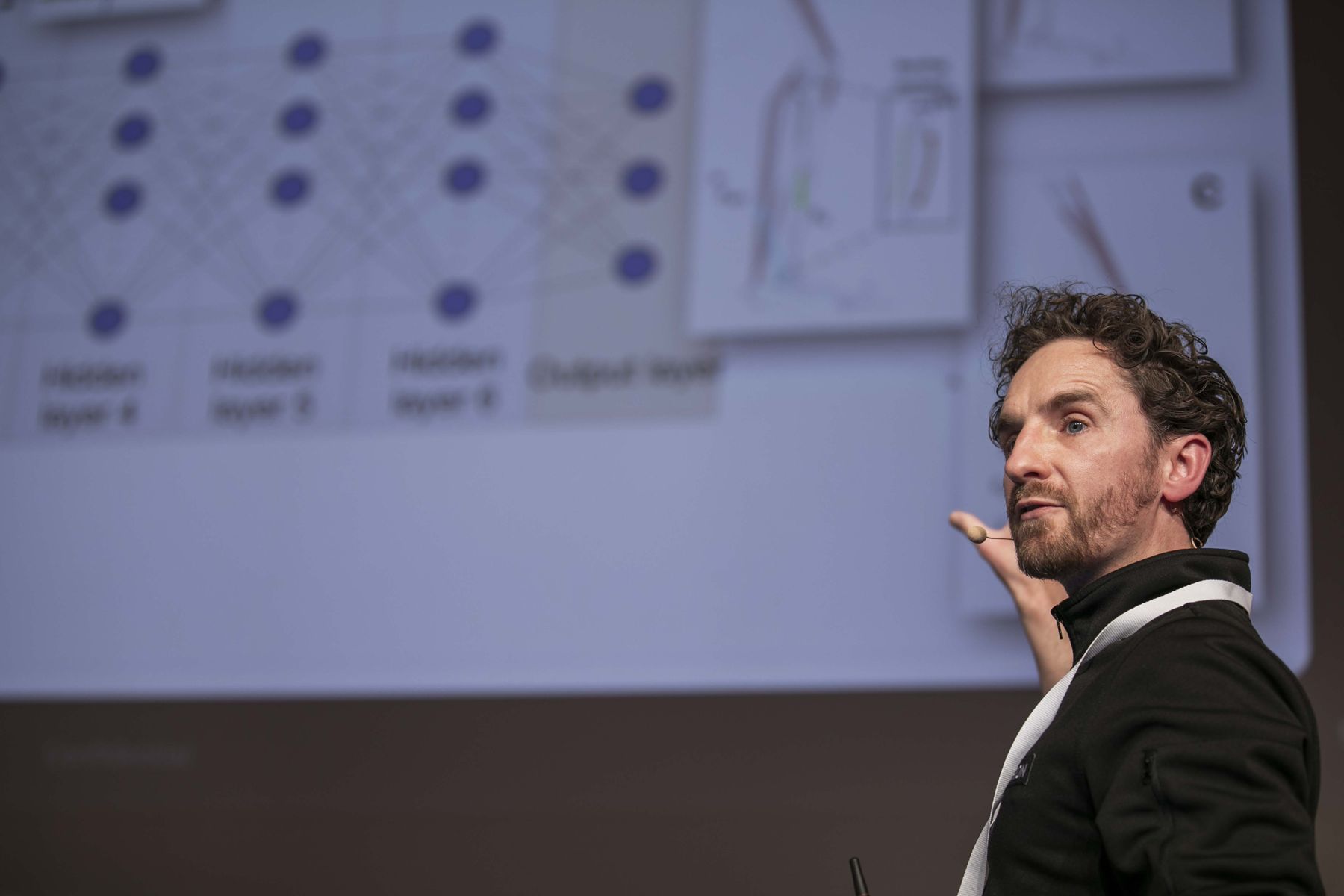
A speaker presenting a neural network diagram
Tuesday 1 December 2026 · Wort & Bild Verlag, Baierbrunn

Programme

One day and four tracks. Computer vision fills the morning, AI infrastructure follows after lunch, and the day finishes with commercialization and then governance, ethics and standards, before a welcome cocktail at 18:00.

Schedule

TimeSession
10:00Welcome
Anselm Küchle, International Football Institute
10:10From Event Data to Skeletal Tracking Data: Building Open-Source Infrastructure for Football Analytics
Pieter Robberechts, KU Leuven
10:40Computer Vision at League Scale: Delivery, Latency and Applications
Hendrik Weber, DFL
11:25Coffee
11:45Selected abstract presentations
From the call for abstracts
12:15Computer Vision Beyond the Laboratory: Broadcast Video and Fixed Cameras in Club Practice
Speakers to be announced
13:00Lunch
13:30Football Match Analysis: Validity of Performance Indicators in Times of AI
Daniel Link, TUM
14:00From Validation to Practice: Translating Sports Technology into Applied Use
Stefan Altmann, TSG Research Lab
14:30Data Ownership and Architecture in the Age of Language Models
Speakers to be announced
15:15Coffee
15:35The European Sports Funding Map: Fundraising Strategies for Sports Technology Ventures
Juan Fuentes and Audra Shallal, EBAN Sports
16:15Accountability in AI for Sport: Ethical Responsibility When Automated Systems Err
Alberto Carrio Sampedro, UPF Barcelona
16:45Open floor
17:05Close
18:00Welcome cocktail
Included in the MIDAS ticket
Track 1

Computer Vision

Computer vision has left the laboratory. At the 2026 World Cup the semi-automated offside system tracks 29 points on every player fifty times a second, and the same technology now feeds broadcast, officiating and performance analysis. The track asks what a club can run week to week from broadcast feeds or a few fixed cameras, and where the data is reliable enough to act on.

Pieter Robberechts of KU Leuven traces the path from event data to 3D skeletal tracking data and argues that open source infrastructure is what moves new data sources from the lab into club practice. Hendrik Weber of the DFL joins a discussion on computer vision from the league's point of view. The remaining slots go to selected abstracts.

Track 2

AI Infrastructure

Every club holds tracking, event, physical and medical data from several providers, usually in systems never designed to talk to each other. That architecture decides whether AI is useful to a coach on a Tuesday. The track covers what a club has to build first: who owns the data, where it lives and how it moves.

Professor Daniel Link of TUM asks how valid performance indicators in football match analysis remain in times of AI. Stefan Altmann of the TSG Research Lab traces the path from research and scientific validation to practical application, using Helix Arena, Sonic Bone and a talent selection model that estimates a player's probability of progressing and supports what-if analyses.
Track 3

Commercialization

The money in sports technology is real and uneven. SportsTechX counted about 12.5 billion dollars in disclosed deal flow through October 2025, but the share for athlete and performance solutions fell to 18 percent against a five-year average of 31 percent. The track covers the path from research to product to buyer: what gets procured, why pilots stall and what investors still active in performance and data are looking for.

Juan Fuentes and Audra Shallal of EBAN Sports give an investor reality check.

Track 4

Governance, Ethics and Standards

The EU AI Act applies a risk-based classification that reaches biometric monitoring and automated decisions about people. Player unions have issued their own data protection guidelines, and most agreements still never define who owns athlete data. The closing track asks whether the tools are trustworthy, fair and interoperable at scale, and who is responsible when a model gets it wrong.

Alberto Carrio Sampedro of UPF Barcelona speaks on the ethics of AI in sport.

Beyond the tracks

Partners

Partner spotlights

Partners get fifteen minutes on stage inside the programme, in front of a room that is small enough to follow up with everyone afterwards. The partners page explains the ways to partner.

Tuesday 1 December 2026Wort & Bild Verlag, Baierbrunn · Welcome cocktail at 18:00